Tulsa storm season: tornadoes, flooding and ice on the road
This page is for Tulsa drivers caught out by a tornado warning, a flooded underpass or an ice storm. It gathers what the National Weather Service, the City of Tulsa, ODOT and the Oklahoma Insurance Department tell drivers, along with the City's own list of streets that flood and the coverage that pays when a storm damages your car.
Sources re-checked .
Short answer
In a tornado warning, drive to the nearest sturdy building and never stop under an overpass. Turn around at flooded roads, since about a foot of rushing water can carry off most cars, and check the City's list of 48 spots that flood. In ice and snow, Tulsa treats arterials first and most neighborhood streets not at all, and only comprehensive coverage pays for storm damage to your car.
National Weather Service: During a tornado; National Weather Service: Turn Around Don't Drown; City of Tulsa: Frequently Flooded Streets; City of Tulsa: Snow and ice FAQ; Oklahoma Insurance Department: Prepare now for storm season
When storms hit Tulsa County, month by month
Our count of NOAA Storm Events records for Tulsa County, 1996-2025, shows when each risk peaks. Each figure counts separate days with at least one record, so a storm with ten reports counts once.
| Month | Tornado days | Flash flood days | Snow and ice days |
|---|---|---|---|
| January | 0 | 0 | 14 |
| February | 1 | 0 | 14 |
| March | 5 | 6 | 6 |
| April | 5 | 15 | 0 |
| May | 10 | 34 | 0 |
| June | 1 | 19 | 0 |
| July | 1 | 12 | 0 |
| August | 1 | 14 | 0 |
| September | 0 | 7 | 0 |
| October | 2 | 7 | 0 |
| November | 3 | 3 | 3 |
| December | 1 | 0 | 11 |
| Total, 30 years | 30 | 117 | 48 |
May leads for tornado days and flash flood days alike, but six of the 30 tornado days came in October, November or December. Every snow and ice day (a winter storm, ice storm or heavy snow record) fell between November and March, 39 of them from December through February. Hail has its own two pages: Tulsa hail season by month and what to do after a hailstorm.
Source: NOAA NCEI Storm Events Database (our count of Tulsa County records, 1996-2025).
Tornado warning while you are driving
Tornado warnings for Tulsa come from the National Weather Service office in Tulsa. A watch means tornadoes are possible; a warning means one has been spotted or shows on radar. For anyone in a car, the weather service says to drive to the closest shelter. If you cannot reach one, it gives two fallbacks: get down in the car and cover your head, or leave the car for a ditch or ravine.
Never stop under an overpass. The weather service is direct: “A highway overpass does not provide safety from a tornado.” ODOT explains that a tornado's wind can speed up as it squeezes through the underpass, and the City of Tulsa adds that cars stopped beneath a bridge become a deadly traffic hazard.
The City's weather page does not soften it: “There is no safe option when caught in a tornado in a car, just slightly less-dangerous ones.” With a tornado in sight, far off and light traffic, the City says you may drive out of its path at right angles. If wind or debris catches you first, pull out of the traffic lanes, keep the seat belt on, and get your head below the windows, covered by your hands or a coat. In a tornado emergency, the weather service's highest alert, it says not to try to outrun a tornado you can see coming.
Source: National Weather Service: During a tornado; National Weather Service: Watch, warning and emergency; National Weather Service: Tornado safety, overpasses; ODOT: Hazardous driving tips, tornadoes and high winds; City of Tulsa: Severe weather, in a car or truck.
Flash flooding: how little water it takes
The weather service's Turn Around Don't Drown page puts numbers on it: “It takes just 12 inches of rushing water to carry away most cars and just 2 feet of rushing water can carry away SUVs and trucks.” Citing the Centers for Disease Control and Prevention, it says more than half of flood drownings involve a vehicle driven into flood water. Never drive around a barricade; the road beneath the water may have collapsed.
Tulsa's frequently flooded streets
The City of Tulsa asks drivers to avoid the spots on its Frequently Flooded Streets list during heavy rain, until the storm drains carry the water off. The list, updated June 25, 2026, names 48 locations, and 19 are underpasses:
| Underpass beneath | Locations on the City list |
|---|---|
| Railroad tracks | 1025 N. Lewis Ave.; 1800 N. Mingo Rd.; Denver Ave. from W. 1st St. to W. Archer St.; N. Denver Ave. from W. Cameron St. to W. Easton St.; E. 3rd St. at Owasso Ave.; E. Archer St. at N. Peoria Ave. |
| The BA (as the list labels it) | E. 15th St. and E. 21st St. each at Columbia Ave.; E. 26th St. at Harvard Ave.; E. 28th St. at Pittsburg Ave.; E. 31st St. at Yale Ave.; E. 33rd St. at Hudson Ave. |
| I-244 | Charles Page Blvd./W. 3rd St. at S. Nogales Ave.; E. Admiral Blvd. at N. Peoria Ave.; S. 33rd W. Ave. at Southwest Blvd. |
| I-44 | 129th E. Ave. at I-44; Sheridan Rd. at I-44; S. 33rd W. Ave. at W. 51st St. |
| Highway 75 | E. 6th St. at S. Madison Ave. |
The other 29 include the 6400 to 6600 blocks of S. Peoria Ave. the 6500 to 6700 blocks of S. Lewis Ave. and S. Sheridan Rd. between 121st and 131st. Compare the list with your commute and plan a dry detour.
Do not wait for a siren. Tulsa has a flood tone of its own, a high-low signal outside the federal guidelines, but the City saves it for catastrophes such as a dam breach or huge Keystone Dam releases, not thunderstorm street flooding. If your car did go under, the flood and salvage title page covers the title brand that can follow.
Source: National Weather Service: Turn Around Don't Drown; National Weather Service: During a flood; City of Tulsa: Frequently Flooded Streets (updated June 25, 2026); City of Tulsa: Emergency sirens, flood tone.
Ice and snow: what Tulsa treats first
City of Tulsa crews clear every arterial (main) street, the L.L. Tisdale Expressway, and the Gilcrease Expressway apart from its turnpike section. ODOT handles the other highways, including ramps inside city limits. As of the City's November 2025 winter announcement, crews work 36 routes, about 1,770 lane miles.
Arterials come first, so emergency responders can get through. Residential and collector streets near hospitals, schools and steep hills come second. Most neighborhood streets are never treated: the City's snow and ice FAQ says they would add 3,000 miles, and Tulsa's winter storms come too seldom to justify the cost. Once a storm passes, the FAQ expects arterials clear within 24 to 36 hours. Crews use salt and brine, not sand, which the City says builds up into a sliding hazard. The arterial streets snow route map shows which roads near you are covered.
Sharing the road with plows
Stay at least 150 feet behind a City snow truck and do not pass it, the FAQ says; ODOT asks for 200 feet behind its equipment. A car left where it got stuck blocks the plows, and the City is clear: “Cars that get stuck and are abandoned will be reported and may be towed at the owner's expense.” The towed and impounded guide explains how to find it. Neither City snow page mentions a snow-route or odd-even parking ban, so that towing warning is the rule to plan around.
Highways and turnpikes
Before a highway trip, check ODOT's map at okroads.org or call 844-4OK-HWYS (844-465-4997), which ODOT updates during bad weather. A joint ODOT and Turnpike Authority winter advisory cites the same map and line, and the free Drive Oklahoma app adds traffic cameras. Bridges and ramps ice first, ODOT warns, and the weather service says black ice is most common early in the morning. For a highway emergency, dial *55 for the Oklahoma Highway Patrol, or 911.
Source: City of Tulsa: Prepared for the 2025-2026 winter season (Nov. 12, 2025); City of Tulsa: Winter preparedness and snow route map; City of Tulsa: Snow and ice FAQ; ODOT: Road conditions resource; ODOT: Drive Oklahoma app; ODOT: Hazardous driving tips; ODOT and OTA: Joint winter highway conditions alert, Jan. 15, 2024; National Weather Service: Ice and black ice.
Getting the car ready for winter
NHTSA's winter checklist starts with what the cold weakens. Tire pressure falls with the temperature, so fill to the figure on the driver's door frame label, not the maximum printed on the tire. Have the battery and charging system checked, since engines need more battery power to start in the cold; electric and hybrid cars lose range instead, and NHTSA suggests plugging them in overnight. Use winter washer fluid with de-icer, replace worn wiper blades, check the coolant, and keep the tank near full. ODOT says at least half.
Each agency publishes its own winter car kit, and they agree on most of it:
| Item | NWS | NHTSA | ODOT |
|---|---|---|---|
| Ice scraper | Yes | Yes | Yes |
| Shovel | Yes | Yes | Yes |
| Sand or cat litter for traction | Yes | Yes | Yes |
| Jumper cables | Yes | Yes | Yes |
| Flashlight | Yes | Yes | Yes |
| First aid kit | Yes | Yes | Yes |
| Blankets | Yes | Yes | Yes |
| Food and water | Yes | Yes | Yes |
| Phone | Yes | Yes | In its before-you-leave steps |
| Flares or warning triangles | Not listed | Yes | Yes |
| Extra clothing | Yes | Not listed | Yes |
The weather service also lists a knife, tool kit, tow rope, candle and matches, and a compass with paper maps. NHTSA adds your medicines; ODOT adds gloves, paper towels and bright fabric for the antenna.
If you get stuck
Stay with the car. The weather service says to run the engine about 10 minutes each hour for heat, crack a window while it runs, and keep snow off the exhaust pipe so carbon monoxide cannot build up. At night, turn on the dome light while the engine runs; tie a bright cloth to the antenna and raise the hood once the snow stops. If a power line falls on the car, ODOT says stay inside and warn others away.
Source: NHTSA: Winter weather driving tips; National Weather Service: Before a winter storm, vehicle kit; National Weather Service: Caught in a winter storm; ODOT: Hazardous driving tips, emergency kit and stranded drivers.
Which car insurance pays for storm damage
Storm damage to your own car is a comprehensive claim. The Oklahoma Insurance Department's consumer pages put flood, falling trees and limbs, lightning and tornado damage under comprehensive, and its resource guide adds wind and hail. Oklahoma does not require comprehensive, though most lenders demand it on a financed car.
Liability-only drivers get nothing for their own car. On a storm-felled tree, the department says: “If you only had liability coverage, then you would be out of pocket for repairs or replacing the vehicle.” Homeowners insurance does not fill the gap: a car damaged in your garage or carport is an auto claim, even if you also file on the house.
A neighbor's tree on your car is the neighbor's insurer's problem only if the neighbor was negligent; an act of nature goes on your own policy. If the repair costs less than your deductible, you pay all of it. The after-a-hailstorm guide walks through a comprehensive claim, and the insurance guide covers Oklahoma minimums. If an insurer stalls, call OID at 800-522-0071 or its Tulsa office at 918-295-3700.
Source: Oklahoma Insurance Department: Prepare now for storm season; Oklahoma Insurance Department: Prepare now for Oklahoma weather; Oklahoma Insurance Department: Guidance after storm damage in eastern Oklahoma (June 28, 2023); Oklahoma Insurance Department: Insurance tips after storms; Oklahoma Insurance Department: After the disaster; Oklahoma Insurance Department: Insurance and Financial Resource Guide (PDF); Oklahoma Insurance Department: Contact us.
Where Tulsa drivers get storm warnings
Your phone. Wireless Emergency Alerts need no sign-up. The weather service sends them for tornado warnings, and for flash flood warnings only when expected damage is considerable or catastrophic. Drive into a warned area after the alert goes out and your phone receives it as you enter.
The weather service. NWS Tulsa posts watches, warnings and its hazardous weather outlook at weather.gov/tsa, and NOAA Weather Radio carries the warnings.
Sirens, for people outdoors. Tulsa's more than 80 sirens, each audible up to a mile, sound automatically wherever an NWS Tulsa tornado warning covers the city. The City says they are meant for people outside, so in a car, rely on your phone or radio. Tests run Wednesdays at noon, weather permitting, and usually last one minute; a real warning lasts three.
Who runs emergency management now. The Tulsa Area Emergency Management Agency (TAEMA), the joint city-county office, has been dissolved. On June 18, 2026, the mayor created a City of Tulsa Department of Emergency Management, which oversees the sirens and coordinates with Tulsa County's own emergency management department. The City said public warnings would continue without disruption.
Source: National Weather Service: Wireless Emergency Alerts; National Weather Service, Tulsa office; National Weather Service: During a tornado, weather radio; City of Tulsa: Emergency sirens; City of Tulsa: Department of Emergency Management established (June 18, 2026); City of Tulsa: Executive Order 2026-02 (PDF).
Storm questions from Tulsa drivers
Can I wait out a tornado under a highway overpass?
No. The National Weather Service and ODOT both say an overpass gives no protection, and the City warns that cars stopped there endanger other drivers. Get to a sturdy building, or get low and cover your head.
Will the City plow or salt my neighborhood street?
Usually not. Arterials come first, then streets near hospitals, schools and steep hills. Most residential streets are left as they are, so check the snow route map before you set out.
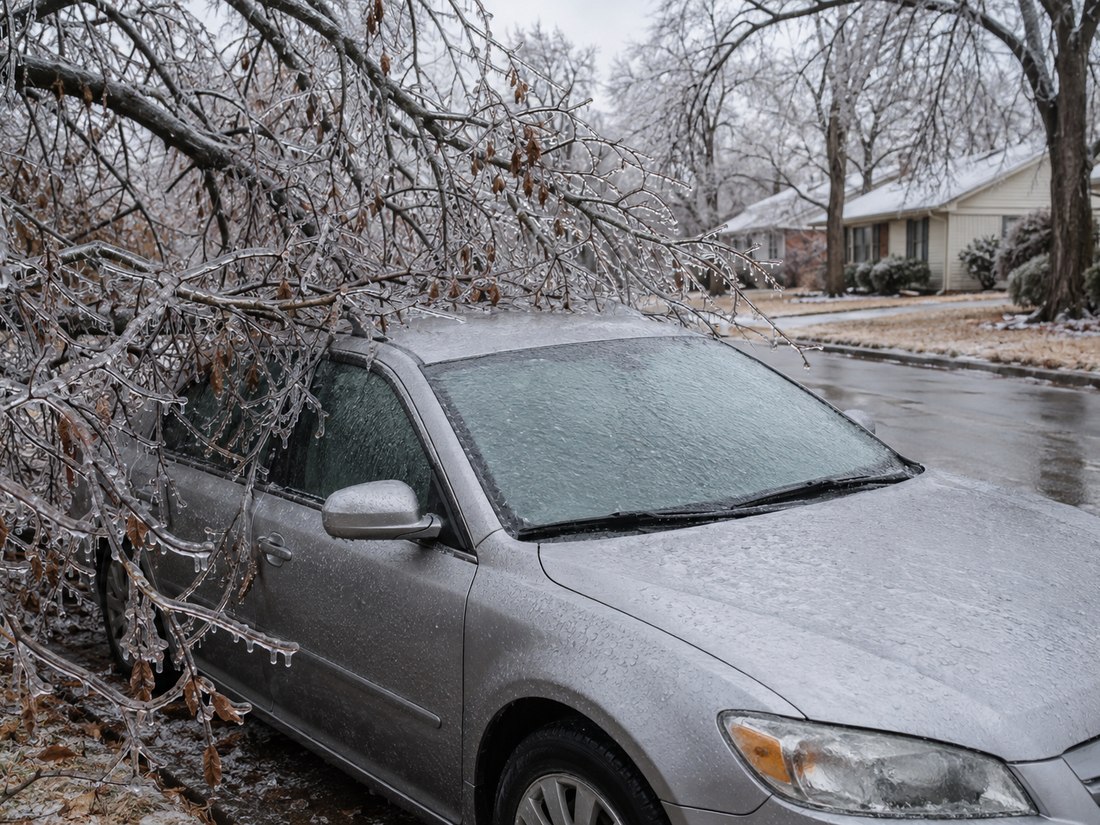
A tree fell on my car in an ice storm. Who pays?
Your comprehensive coverage, if you have it. Homeowners insurance does not pay for the car, and liability-only coverage pays nothing toward your own vehicle.
Do Tulsa's sirens sound for flash floods?
Not for everyday street flooding. The flood tone is kept for disasters such as a dam breach, so watch your phone for flash flood warnings and avoid the streets on the City's flood list.
My car sat in flood water. Is it a total loss?
Start with your insurer: flood damage to a car falls under comprehensive coverage, and the insurer's adjuster assesses it. The flood and salvage title page explains what a flood can do to an Oklahoma title.
If a storm leaves the car not worth fixing
If a flood or a falling tree leaves you holding a car that is not worth repairing, call (539) 271-2021 or use the sell-it-to-us form. We cover all of Tulsa, buy some cars ourselves and pay by check. If we cannot buy yours, we tell you so and point you to a partner's free online offer.
More on selling a car in Tulsa
- PaperworkWhat you sign, who notarizes it, the two-day deadline, and which counter in Tulsa takes it.
- Cash for carsMoney for a running, dead or junk car anywhere in Tulsa: our offer or the partner route, paid by check.
- Bill of saleWhen Oklahoma needs a bill of sale, whether it is notarized, and what goes on it.
- Repair or sellCompare repair costs with the extra sale proceeds, then check Oklahoma's salvage and rebuilt title rules.
- After you sellPlate off, the two-day filing, insurance, PikePass, and what to do if a ticket arrives for a car you sold.
- Title problemsLost the title, a lien still on record, the owner has died, or the title is from another state.